Showing posts with label Early Humans. Show all posts

Thursday, 1 March 2018

Shelters with echoes thought to be preferred sites for prehistoric rock art


The acoustic qualities of a rock shelter may have been a key factor in its selection as a site for rock art and indicate a spiritual significance to the practice, according to a recent study, while scientists are also looking into whether some caves were chosen as artistic sites because of the view.

Shelters with echoes thought to be preferred sites for prehistoric rock art
Scientists believe that rock art sites were chosen for their visual and acoustic properties
[Credit: Curt Harrell]
Professor Margarita Díaz-Andreu and Dr. Tommaso Mattioli, both from the University of Barcelona, Spain, spent two years visiting rock art sites in France, Italy and Spain to compare acoustics and assess their relevance to the choice of location.

'In a cliff such as Baume Brune (in Vaucluse, France), with 43 shelters, why were only eight selected to be painted?' said Prof. Díaz-Andreu. 'There are other apparently similar ones nearby that were left empty. Why?'

Armed with a specialised portable tool for measuring acoustics, the researchers showed the rock art sites studied have distinct acoustic features.

These take the form of either many echoes in the shelters where the art was found, or strong reverberations. At some sites, it was possible to hear sounds from great distances. Other undecorated shelters in the area lacked these special effects.

'We found that in all of the areas that we tested, the people who had chosen places to decorate had selected places with good acoustics,' said Prof. Díaz-Andreu. In two particular sites, the team demonstrated that the places that were decorated were those with more echoes.

Music

This suggests that the rock art sites were used for rituals, or religious ceremonies, and may or may not have involved music.

'As archaeologists we are obsessed with material culture,' said Prof. Diaz-Andreu, 'But in fact, sound and music are very important to the way in which we feel and the way we react. Sound has special properties that facilitate us to reach a type of mental state that is prone to enhance religious feelings.'

Dr. Jamie Hampson, a researcher at the University of York, UK, who works on a project exploring the modern-day use of rock art (see below), agreed that the rock art has spiritual significance. 'We've got a lot of ethnography from groups in South Africa in particular about the rock face being a veil between this world and the spirit world,' he said.

Prof. Díaz-Andreu and Dr. Mattioli believe that prehistoric humans may have used echolocation techniques such as tongue clicks, cane tapping and handclapping to select the shelters. However, this is impossible to prove.

'Clicking and handclapping do not leave a trace in the archaeological record,' Prof. Díaz-Andreu said.

Rock art is found at hundreds of thousands of sites throughout the world. Throughout history, people from all walks of life have used rock carvings, engravings and paintings to express themselves, and the oldest sites found are more than 65,000 years old.


Manual rubbings

Up until now, researchers have had to take manual rubbings of rock art to analyse in the lab. But this low-tech, 2-D and labour-intensive option meant that important data, such as colour and the 3-D nature of indentations in the rock, were missing.

Now, new zoomable 3-D digital models of rock art sites are providing archaeologists with better tools for analysing data – and they could shed light on why certain sites were chosen. They could also help archaeologists work out whether traces at certain sites are man-made or natural, and potentially identify the styles of individual artists.

Dr. Sue Cobb of the University of Nottingham, UK, led the 3-D-PITOTI project, which developed fully interactive virtual replicas of several rock art sites at Valcamonica, Northern Italy, in high detail.

She said: 'The archaeologists were looking for a way to analyse the content that they were studying in more detail and in different ways. They wanted a better way to view and compare small details of different rock art figures, identify families of figures, and make the 3-D rock art available to their fellow colleagues and the public.'

To build the models, the project team developed an entirely new scanning device to collect images of the rock surface. Specially designed to capture the colour of the rock art and intricate details, at the same time it is lightweight and portable enough to be easily transported across inaccessible areas, hence the nickname 'walking-stick scanner'.

The scanner is so powerful it can reconstruct surface points at 0.1 millimetre spatial resolution, and uses a high=powered flash.

A feature of the finished 3-D models is that you can zoom in and out from the images easily, and virtually fly over the sites. To achieve this effect, the team took photographs from near-range, mid-range and far-range locations to capture the rock art from a range of distances and angles.

The 3-D models can be viewed via a 3-D multi-user touch table, a multi-user 3-D wall display, or individual tablets. Tourists can use the models in museums and visitor centres, to view rock art that is inaccessible or highly vulnerable to damage.

As well as providing a faithful record of art that is one day likely to vanish from exposure to wind, rain and snow, the highly detailed 3-D models are helping scientists answer questions such as whether the view from a particular place was important in selecting the site for decoration.

'Archaeologists can compare rock art images located in different sites,' said Dr. Cobb. 'They ask—is there anything meaningful about those locations and the images of rock art that are placed at that site that can help us understand why that site was meaningful to people at that time?'

Modern-day use of rock art imagery

Rock art sites can be a big tourist draw and scientists have been looking at how the experience can best be managed. Dr. Jamie Hampson from the University of York found that visitor perceptions of artwork and the management of rock art sites in South Africa, Australia and the US were enhanced when there were indigenous tour guides and staff at the sites.

'A lot of visitors point out how much more meaningful their experience is if they're accompanied by a guide who is part of an indigenous group in the area,' explained Dr. Hampson.

It's clear that for many indigenous people, rock art holds a symbolic and spiritual meaning. However, it is often used to create tourist memorabilia, without seeking permission from the relevant indigenous people. Certain images are considered sacred and are not suitable for this kind of use.

'So much of this is about respect and courtesy and taking all possible measures to ensure permission is granted before images are borrowed,' said Dr. Hampson.

The work done by Dr. Hampson's ROCKART project encouraged the employment of more indigenous staff at heritage sites, and raised awareness about image appropriation. The project also aided several Aboriginal corporations in Australia to set up and run their own rock art visitor centres, fueling entrepreneurship in remote areas.

Author: Catherine Collins | Source: Horizon: The EU Research & Innovation Magazine [March 01, 2018]

Read more

Friday, 23 February 2018

Giant handaxes suggest that different groups of early humans coexisted in ancient Europe


Even our earliest human ancestors made and used technology - something we can look back on thanks to the lasting nature of stone tools.

Giant handaxes suggest that different groups of early humans coexisted in ancient Europe
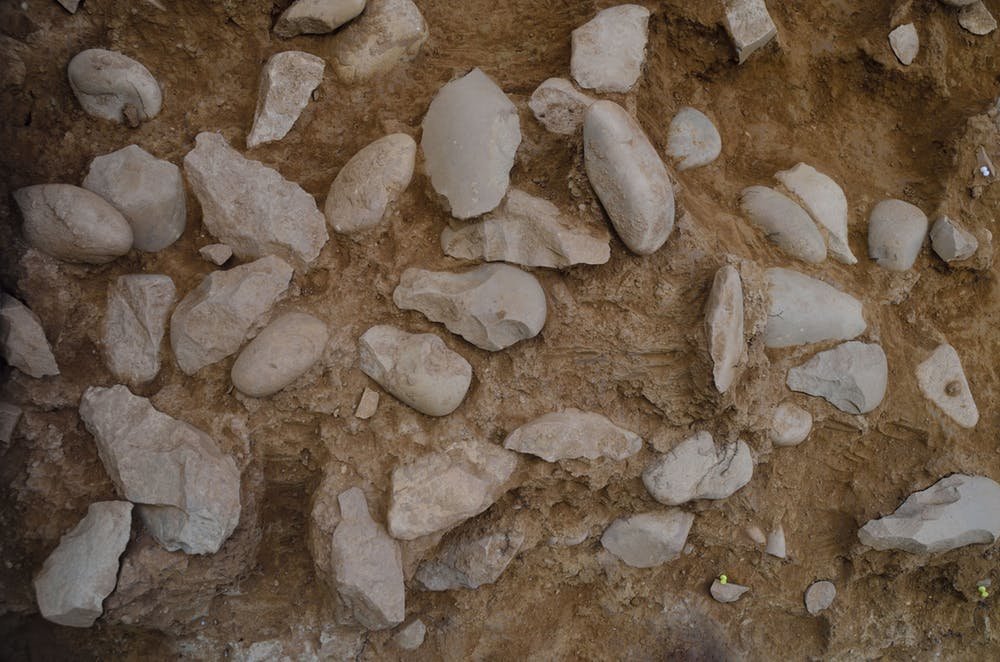
Researchers work on the archaeological site in Spain, known as Porto Maior, where the tool deposits were found
[Credit: Eduardo Méndez Quintas, Author provided]
An exceptionally high density of giant handaxes dated to 200,000-300,000 years ago has been uncovered at an archaeological site in Galicia, northwest Spain. The findings are documented in a new article published by our international research team of archaeologists and dating specialists.

The discovery of these handaxes suggests that alternative types of stone tool technologies were simultaneously being used by different populations in this area – supporting the idea that a prehistoric “Game of Thrones” scenario existed as Neanderthals emerged in Europe.

Additional evidence for this idea comes from fossil records showing that multiple human lineages lived in southwest Europe around the same time period.

Stone tool technology

Porto Maior is near the town of As Neves (Pontevedra, Galcia) on a terrace 34m above the current level of the Miño River, which borders northern Portugal and Spain.

Giant handaxes suggest that different groups of early humans coexisted in ancient Europe
The large tools are consistent with a culture known as Acheulean
[Credit: Eduardo Mendez Quintas, Author provided]
The archaeological site at Porto Maior preserves an ancient stone tool culture known as the Acheulean. Characterised by symmetrically knapped stones or large flakes (known as bifaces), the Acheulean is the first sophisticated handaxe technology known in the early human settlement record of Europe.

While Acheulean sites are widespread across the continent, Porto Maior represents Europe’s first extensive accumulation of large cutting tools (LCTs) in the Acheulean tradition. Until now, such high densities of LCTs had only been found in Africa. This new finding reinforces an African origin for the Acheulean in Europe, and confirms an overlap in time-frames of distinctly different stone tool cultures on the continent.


At around the same time that handaxes were being used at Porto Maior, a different stone tool tradition (the Early Middle Palaeolithic) was present in Iberia, for example at Ambrona and Cuesta de la Bajada. In central and eastern Europe – where tools were made exclusively on small flakes – the Acheulean tradition has never been found.

Porto Maior introduces further complexity to this overlapping technological pattern, and suggests that distinct early human populations of different geographical origins coexisted during the Middle Pleistocene (between 773,000 and 125,000 years ago).

Abundant large cutting tools

In total, 3,698 discarded artefacts were recovered from river-lain sediments at the site, with 290 of these making up the studied assemblage reported in our new paper.

The stone tool assemblage is composed of 101 LCTs in original position, and that are on average 18cm long, with a maximum length of 27cm. These handaxe dimensions are exceptionally large by European Acheulean standards (typically only 8-15cm long). The assemblage also contains large cleavers, a type of tool typically found in African sites.


At 9.5 pieces per m² in an excavated area of more than 11.8m², the density of the Acheulean stone tool accumulation is one of the highest recorded globally, surpassing previous European findings of smaller Acheulean tools (usually less than 3 artefacts per m²).

Laboratory analyses indicate that the tools were used to process hard materials such wood and bone, in activities that could have included the breaking up of carcasses.

The Spanish site of Porto Maior clearly resembles extensive accumulations of very large tools previously only seen in Africa and the Near East. These similarities reinforce the idea of an African origin for the Acheulean tradition of southwest Europe.

They also raise new questions regarding the origin and mobility of prehistoric human populations – the ancestors of Neanderthals – that occupied the European continent during the Middle Pleistocene period before the arrival of our own species, Homo sapiens.

Dating the tools

The age of these unusually large Acheulean tools at Porto Maior was determined using two different dating methods – post-infrared infrared stimulated luminescence (pIR-IRSL) dating of potassium feldspar grains and electron spin resonance (ESR) dating of quartz grains.

Giant handaxes suggest that different groups of early humans coexisted in ancient Europe
Luminescence dating samples being measured under controlled lighting conditions at the University of Adelaide’s
Prescott Environmental Luminescence Laboratory [Credit: Lee Arnold]
These techniques provide an estimate of the last time sand grains within sediments were exposed to sunlight, by looking at their luminescence or paramagnetic properties – that is, they can tell us the timing of sediment burial. This, in turn, can be used to determine when the site was last occupied and when the artefacts discarded by prehistoric populations were subsequently buried by sediment accumulation.

In the study of Porto Maior, pIR-IRSL and ESR dating were applied to grains that had been carefully collected from the sediment layers hosting the stone tools, without exposing the sample material to daylight.

The two methods, which were applied independently at two different Australian institutions (University of Adelaide and Griffith University), produced remarkably similar ages.

This confirms the reliability of the dating results, and indicates that the archaeological record spanned the time period from 200,000 to 300,000 years ago.

Migration from Africa

The Acheulean tool-making tradition originated in Africa about 1.7 million years ago, and disappeared on that continent by 500,000 years ago. The specific type of Acheulean tools described at Porto Maior is exclusive to southwest Europe, suggesting that the technology was brought into the region by an “intrusive” population.

Giant handaxes suggest that different groups of early humans coexisted in ancient Europe
Acheulean tools in their primary position at Porto Maior, Spain
[Credit: Eduardo Mendez-Quintas, CC BY]
The age of Porto Maior is consistent with previous findings from Iberia that suggest that the Acheulean culture experienced an expansion in the region between 400,000 to 200,000 years ago.

This latest discovery supports the increasingly complex narrative developing from ongoing studies of human fossils from Europe; namely that human groups of potentially different origins and evolutionary stages coexisted across the continent during a time when the emergence of Neanderthals was taking place.

While it is clear that more human fossil and stone tool sites need to be reliably dated across the region, a picture appears to be emerging of a turbulent “Game of Thrones” style scenario of hominin evolution in Eurasia during the Middle Pleistocene period.

Authors: Martina Demuro, Lee Arnold And Mathieu Duval | Source: The Conversation [February 23, 2018]

This article was originally published on The Conversation. Read the original article.

Read more

Thursday, 22 February 2018

Neanderthals were artistic like modern humans, study indicates


Scientists have found the first major evidence that Neanderthals, rather than modern humans, created the world's oldest known cave paintings -- suggesting they may have had an artistic sense similar to our own.

Neanderthals were artistic like modern humans, study indicates
Panel 3 in Maltravieso Cave showing 3 hand stencils (centre right, centre top and top left). One has been dated to at least
66,000 years ago and must have been made by a Neanderthal (colour enhanced) [Credit: H. Collado]
A new study led by the University of Southampton and the Max Planck Institute for Evolutionary Anthropology shows that paintings in three caves in Spain were created more than 64,000 years ago -- 20,000 years before modern humans arrived in Europe.

This means that the Palaeolithic (Ice Age) cave art -- including pictures of animals, dots and geometric signs -- must have been made by Neanderthals, a 'sister' species to Homo sapiens, and Europe's sole human inhabitants at the time.

It also indicates that they thought symbolically, like modern humans.

Published in the journal Science, the study reveals how an international team of scientists used a state-of-the-art technique called uranium-thorium dating to fix the age of the paintings as more than 64,000 years.

Until now, cave art has been attributed entirely to modern humans, as claims to a possible Neanderthal origin have been hampered by imprecise dating techniques. However, uranium-thorium dating provides much more reliable results than methods such as radiocarbon dating, which can give false age estimates.

Neanderthals were artistic like modern humans, study indicates
Panel 78 in La Pasiega. The scalariform (ladder shape) composed of red horizontal
and vertical lines dates to older than 64,000 years and was made by Neanderthals
[Credit: C.D Standish, A.W.G. Pike and D.L. Hoffmann]
The uranium-thorium method involves dating tiny carbonate deposits that have built up on top of the cave paintings. These contain traces of the radioactive elements uranium and thorium, which indicate when the deposits formed -- and therefore give a minimum age for whatever lies beneath.

Joint lead author Dr Chris Standish, an archaeologist at the University of Southampton, said: "This is an incredibly exciting discovery which suggests Neanderthals were much more sophisticated than is popularly believed.

"Our results show that the paintings we dated are, by far, the oldest known cave art in the world, and were created at least 20,000 years before modern humans arrived in Europe from Africa -- therefore they must have been painted by Neanderthals."

A team of researchers from the UK, Germany, Spain and France analysed more than 60 carbonate samples from three cave sites in Spain -- La Pasiega (north-eastern Spain), Maltravieso (western Spain) and Ardales (south-western Spain).

Neanderthals were artistic like modern humans, study indicates
The ladder shape composed of red horizontal and vertical lines (centre left) dates to older than 64,000 years
and was made by Neanderthals [Credit: © P. Saura]
All three caves contain red (ochre) or black paintings of groups of animals, dots and geometric signs, as well as hand stencils, hand prints and engravings.

According to the researchers, creating the art must have involved such sophisticated behaviour as the choosing of a location, planning of light source and mixing of pigments.

Alistair Pike, Professor of Archaeological Sciences at the University of Southampton and co-director of the study, said: "Soon after the discovery of the first of their fossils in the 19th century, Neanderthals were portrayed as brutish and uncultured, incapable of art and symbolic behaviour, and some of these views persist today.

"The issue of just how human-like Neanderthals behaved is a hotly debated issue. Our findings will make a significant contribution to that debate."

Joint lead author Dirk Hoffmann, of the Max Planck Institute for Evolutionary Anthropology, added that symbolic material culture -- a collection of cultural and intellectual achievements handed down from generation to generation -- has, until now, only been attributed to our species.

Neanderthals were artistic like modern humans, study indicates
Drawing of Panel 78 in La Pasiega by Breuil et al (1913). The red scalariform (ladder) symbol
has a minimum age of 64,000 years but it is unclear if the animals and other symbols
were painted later [Credit: Breuil et al.]
"The emergence of symbolic material culture represents a fundamental threshold in the evolution of humankind. It is one of the main pillars of what makes us human," he said.

"Artefacts whose functional value lies not so much in their practical but rather in their symbolic use are proxies for fundamental aspects of human cognition as we know it."

Early symbolic artefacts, dating back 70,000 years, have been found in Africa but are associated with modern humans.

Other artefacts including cave art, sculpted figures, decorated bone tools and jewellery have been found in Europe, dating back 40,000 years. But researchers have concluded that these artefacts must have been created by modern humans who were spreading across Europe after their arrival from Africa.


There is evidence that Neanderthals in Europe used body ornamentation around 40,000 to 45,000 years ago, but many researchers have suggested this was inspired by modern humans who at the time had just arrived in Europe.

Study co-author Paul Pettitt, of Durham University, commented: "Neanderthals created meaningful symbols in meaningful places. The art is not a one-off accident.

"We have examples in three caves 700km apart, and evidence that it was a long-lived tradition. It is quite possible that similar cave art in other caves in Western Europe is of Neanderthal origin as well."

Source: University of Southampton [February 22, 2018]

Read more

Wednesday, 21 February 2018

Did humans speak through cave art? New paper links ancient drawings and language’s origins


When and where did humans develop language? To find out, look deep inside caves, suggests an MIT professor.

Did humans speak through cave art? New paper links ancient drawings and language’s origins
Stock image of a cave painting in South Africa [Credit: MIT]
More precisely, some specific features of cave art may provide clues about how our symbolic, multifaceted language capabilities evolved, according to a new paper co-authored by MIT linguist Shigeru Miyagawa.

A key to this idea is that cave art is often located in acoustic “hot spots,” where sound echoes strongly, as some scholars have observed. Those drawings are located in deeper, harder-to-access parts of caves, indicating that acoustics was a principal reason for the placement of drawings within caves. The drawings, in turn, may represent the sounds that early humans generated in those spots.

In the new paper, this convergence of sound and drawing is what the authors call a “cross-modality information transfer,” a convergence of auditory information and visual art that, the authors write, “allowed early humans to enhance their ability to convey symbolic thinking.” The combination of sounds and images is one of the things that characterizes human language today, along with its symbolic aspect and its ability to generate infinite new sentences.

“Cave art was part of the package deal in terms of how homo sapiens came to have this very high-level cognitive processing,” says Miyagawa, a professor of linguistics and the Kochi-Manjiro Professor of Japanese Language and Culture at MIT. “You have this very concrete cognitive process that converts an acoustic signal into some mental representation and externalizes it as a visual.”

Cave artists were thus not just early-day Monets, drawing impressions of the outdoors at their leisure. Rather, they may have been engaged in a process of communication.

“I think it’s very clear that these artists were talking to one another,” Miyagawa says. “It’s a communal effort.”

The paper, “Cross-modality information transfer: A hypothesis about the relationship among prehistoric cave paintings, symbolic thinking, and the emergence of language,” is published in the journal Frontiers in Psychology. The authors are Miyagawa; Cora Lesure, a PhD student in MIT’s Department of Linguistics; and Vitor A. Nobrega, a PhD student in linguistics at the University of Sao Paulo, in Brazil.

Re-enactments and rituals?

The advent of language in human history is unclear. Our species is estimated to be about 200,000 years old. Human language is often considered to be at least 100,000 years old.

“It’s very difficult to try to understand how human language itself appeared in evolution,” Miyagawa says, noting that “we don’t know 99.9999 percent of what was going on back then.” However, he adds, “There’s this idea that language doesn’t fossilize, and it’s true, but maybe in these artifacts [cave drawings], we can see some of the beginnings of homo sapiens as symbolic beings.”

While the world’s best-known cave art exists in France and Spain, examples of it abound throughout the world. One form of cave art suggestive of symbolic thinking — geometric engravings on pieces of ochre, from the Blombos Cave in southern Africa — has been estimated to be at least 70,000 years old. Such symbolic art indicates a cognitive capacity that humans took with them to the rest of the world.

“Cave art is everywhere,” Miyagawa says. “Every major continent inhabited by homo sapiens has cave art. … You find it in Europe, in the Middle East, in Asia, everywhere, just like human language.” In recent years, for instance, scholars have catalogued Indonesian cave art they believe to be roughly 40,000 years old, older than the best-known examples of European cave art.

But what exactly was going on in caves where people made noise and rendered things on walls? Some scholars have suggested that acoustic “hot spots” in caves were used to make noises that replicate hoofbeats, for instance; some 90 percent of cave drawings involve hoofed animals. These drawings could represent stories or the accumulation of knowledge, or they could have been part of rituals.

In any of these scenarios, Miyagawa suggests, cave art displays properties of language in that “you have action, objects, and modification.” This parallels some of the universal features of human language — verbs, nouns, and adjectives — and Miyagawa suggests that “acoustically based cave art must have had a hand in forming our cognitive symbolic mind.”

Future research: More decoding needed

To be sure, the ideas proposed by Miyagawa, Lesure, and Nobrega merely outline a working hypothesis, which is intended to spur additional thinking about language’s origins and point toward new research questions.

Regarding the cave art itself, that could mean further scrutiny of the syntax of the visual representations, as it were. “We’ve got to look at the content” more thoroughly, says Miyagawa. In his view, as a linguist who has looked at images of the famous Lascaux cave art from France, “you see a lot of language in it.” But it remains an open question how much a re-interpretation of cave art images would yield in linguistics terms.

The long-term timeline of cave art is also subject to re-evaluation on the basis of any future discoveries. If cave art is implicated in the development of human language, finding and properly dating the oldest known such drawings would help us place the orgins of language in human history — which may have happened fairly early on in our development.

“What we need is for someone to go and find in Africa cave art that is 120,000 years old,” Miyagawa quips.

At a minimum, a further consideration of cave art as part of our cognitive development may reduce our tendency to regard art in terms of our own experience, in which it probably plays a more strictly decorative role for more people.

“If this is on the right track, it’s quite possible that … cross-modality transfer helped develop a symbolic mind,” Miyagawa says. In that case, he adds, “art is not just something that is marginal to our culture, but central to the formation of our cognitive abilities.”

Author: Peter Dizikes | Source: Massachusetts Institute of Technology [February 21, 2018]

Read more

Tuesday, 20 February 2018

Homo erectus may have sailed to islands and used language


They had bodies similar to modern humans, could make tools, and were possibly the first to cook. Now one expert is arguing that Homo erectus might have been a mariner – complete with sailing lingo.

Homo erectus may have sailed to islands and used language
Language was necessary for the spread of toolmaking technology, as well as for boat-building and sailing,
researchers suggest [Credit: Alamy Stock Photo]
Homo erectus first appeared in Africa more than 1.8m years ago and is thought to be the first archaic human to leave the continent.

H. erectus fossils have turned up not only in Southern Europe, but as far afield as China and Indonesia. Some argue that the mysterious hominid Homo floresiensis, discovered on the island of Flores, could be descended from H. erectus – although others disagree.

“Oceans were never a barrier to the travels of Erectus. He travelled all over the world, travelled to the island of Flores, across one of the greatest ocean currents in the world,” said Daniel Everett, professor of global studies at Bentley University, and author of How Language Began. “They sailed to the island of Crete and various other islands. It was intentional: they needed craft and they needed to take groups of twenty or so at least to get to those places.”

While Everett is not the first to raise the controversial possibility that H. erectus might have fashioned some sort of seagoing vessel, he believes that such capabilities mean that H. erectus must also have had another skill: language.

“Erectus needed language when they were sailing to the island of Flores. They couldn’t have simply caught a ride on a floating log because then they would have been washed out to sea when they hit the current,” said Everett, presenting his thesis at the meeting of the American Association for the Advancement of Science in Austin. “They needed to be able to paddle. And if they paddled they needed to be able to say ‘paddle there’ or ‘don’t paddle.’ You need communication with symbols not just grunts.”

It is unknown when language emerged among hominids; some argue that it is a feature only of our own species, Homo sapiens, which suggests a timing of no earlier than 200,000 years ago. But Everett believes it goes back further than that.


Everett says that H. erectus would have been unable to make the same range of sounds as we do, not least because they lacked the version of a gene necessary for speech and language to develop – known as FOXP2 – found in modern humans and Neanderthals, although it is not clear whether Neanderthals had language. But he argues that as few as two sounds are needed for a language, and that it is likely H.erectus could make more than that.

“They had what it took to invent language – and language is not as hard as many linguists have led us to believe. If you have symbols in a linear order then you have a grammar,” said Everett. “Homo erectus spoke and invented the Model T Ford of language. We speak the Tesla form, but their Model T form was not a proto-language it was a real language.”

“Everybody talks about Homo erectus as a stupid ape-like creature, which of course describes us just as well, and yet what I want to emphasise is that Erectus was the smartest creature that had ever walked the Earth,” he said.

The theory received mixed reactions from others. Kevin Laland, professor of behavioural and evolutionary biology at the University of St Andrews, said he agreed with Everett. “The important thing to recognise is that language did not appear in modern form all at once, but gradually evolved from a protoculture comprising just a handful of words with little grammatical structure. Certainly, it is highly plausible that Homo erectus had a protolinguistic capability,” he said, adding that work by his own team hinted it was possible. “Our experiment suggests that it would have been very difficult for knowledge of how to manufacture Homo erectus’s Acheulian stone tools to spread without a simple form of language. The study also demonstrates that stone toolmaking would had created a selection pressure favouring increased linguistic capabilities,” he said.

But others say that there is little evidence that H. erectus was a sophisticated seafarer, let alone had a language. “I don’t accept that, for example, [Homo] erectus must have had boats to get to Flores,” said Chris Stringer, head of human origins at the Natural History Museum in London. “Tsunamis could have moved early humans on rafts of vegetation.”

That said, Stringer notes that Homo heidelbergensis, another extinct relative of ours that lived between 700,000 and 300,000 years ago, might have been capable of some sort of chat. “I think [Homo] heidelbergensis had a complex enough life to require speech, though not at the level of modern human language. With [Homo] erectus, I’m not so sure,” said Stringer, adding that the ability of H. erectus to make and use tools is not, as some have argued, convincing evidence. “Chimps and crows make and use tools without a human kind of language,” he said.

Author: Nicola Davis | Source: The Guardian [February 20, 2018]

Read more

Brain size of human ancestors evolved gradually over 3 million years


Modern humans have brains that are more than three times larger than our closest living relatives, chimpanzees and bonobos. Scientists don't agree on when and how this dramatic increase took place, but new analysis of 94 hominin fossils shows that average brain size increased gradually and consistently over the past three million years.

Brain size of human ancestors evolved gradually over 3 million years
Models of human ancestors brain size compared to modern day humans
[Credit: Matt Wood, UChicago]
The research, published this week in the Proceedings of the Royal Society B, shows that the trend was caused primarily by evolution of larger brains within populations of individual species, but the introduction of new, larger-brained species and extinction of smaller-brained ones also played a part.

"Brain size is one of the most obvious traits that makes us human. It's related to cultural complexity, language, tool making and all these other things that make us unique," said Andrew Du, PhD, a postdoctoral scholar at the University of Chicago and first author of the study. "The earliest hominins had brain sizes like chimpanzees, and they have increased dramatically since then. So, it's important to understand how we got here."

Du began the work as a graduate student at the George Washington University (GW). His advisor, Bernard Wood, GW's University Professor of Human Origins and senior author of the study, gave his students an open-ended assignment to understand how brain size evolved through time. Du and his fellow students, who are also co-authors on the paper, continued working on this question during his time at George Washington, forming the basis of the new study.

"Think about the entrance to a building. You can reach the front door by walking up a ramp, or you can take the steps," Wood said. "The conventional wisdom was that our large brains had evolved because of a series of step-like increases each one making our ancestors smarter. Not surprisingly the reality is more complex, with no clear link between brain size and behavior."

Brain size of human ancestors evolved gradually over 3 million years
Modern human brains (left) are more than three times larger than our closest relatives, chimpanzees (right)
[Credit: Andrew Du, UChicago]
"The moral is this: When you don't understand something ask a bunch of bright and motivated students to figure it out," he said.

Du and his colleagues compared published research data on the skull volumes of 94 fossil specimens from 13 different species, beginning with the earliest unambiguous human ancestors, Australopithecus, from 3.2 million years ago to pre-modern species, including Homo erectus, from 500,000 years ago when brain size began to overlap with that of modern-day humans.

The researchers saw that when the species were counted at the clade level, or groups descending from a common ancestor, the average brain size increased gradually over three million years. Looking more closely, the increase was driven by three different factors, primarily evolution of larger brain sizes within individual species populations, but also by the addition of new, larger-brained species and extinction of smaller-brained ones. The team also found that the rate of brain size evolution within hominin lineages was much slower than how it operates today, although why this discrepancy exists is still an open question.

The study quantifies for the first time when and by how much each of these factors contributes to the clade-level pattern. Du said he likens it to how a football coach might build a roster of bigger, strong players. One way would be to make all the players hit the weight room to bulk up. But the coach could also recruit new, larger players and cut the smallest ones.

"That's exactly what we see going on in brain size," he said. "The dominant process is like the players hitting the gym. They're evolving larger brains within a population. But we also see speciation events adding larger-brained daughter species, or recruiting bigger players, and we see extinction, or cutting the smallest players too."

Source: University of Chicago Medical Center [February 20, 2018]

Read more

Monday, 19 February 2018

First 3-D morphometric study of the molars of Sima de los Huesos


The Dental Anthropology Group of the Centro Nacional de Investigación sobre la Evolución Humana (CENIEH) forms part of the team which has just published a paper in American Journal of Physical Anthropology on the morphological analysis of the dentin in the lower molars of the population of the archaeological site of Sima de los Huesos (Atapuerca, Burgos), using three-dimensional geometric morphometry, in order to study the origin of the Neanderthals.

First 3-D morphometric study of the molars of Sima de los Huesos
Dentine surface illustrating the landmarks used to capture their shape
[Credit: Hanegraef et al.]
In this innovative study, in which scientists from University College London have also participated, 85 molars have been analyzed using computerized axial microtomography in the laboratories of the CENIEH, which has allowed high-resolution virtual sections to be obtained.

Geometric morphometric analyses performed hitherto have been based on using two-dimensional images such as photographs, although the application of new technologies such as micro-CT and the 3D reconstruction software Amira have made possible the first work of geometric morphometry using three-dimensional images.

“With the results obtained, we have been able to ratify once again the similarities found between the population of Sima de los Huesos and the Neanderthals, and the differences between these and Homo sapiens”, explains the director of the CENIEH María Martinón-Torres, co-author of this work.

Nevertheless, despite the notable affinities with Homo neanderthalensis, the population of Sima de los Huesos displays lower intra-population variability and has certain features even more derived than the Neanderthals themselves.

Neanderthal accretion

The principal objective of the authors, in addition to reviewing the current hypotheses which explain the origin of the Neanderthals, has been to verify the reliability of the Neanderthal accretion model, which suggests that Neanderthal characteristics did not develop in a linear and continuous manner, but  rather accreted abruptly at different periods.

“The results of this investigation favor the theory of a more complex evolutionary scenario for the European continent during the Middle Pleistocene, with the coexistence of different populations and without rejecting possible hybridization between them”, concludes Martinón-Torres.

Source: CENIEH [February 19, 2018]

Read more

Thursday, 15 February 2018

Did humans domesticate themselves?


Human 'self-domestication' is a hypothesis that states that among the driving forces of human evolution, humans selected their companions depending on who had a more pro-social behavior. Researchers from a team of the UB led by Cedric Boeckx, ICREA professor at the Department of Catalan Philology and General Linguistics and member of the Institute of Complex Systems of the University of Barcelona (UBICS), found out new genetic evidence for this evolutionary process.

Did humans domesticate themselves?
Craniofacial differences between modern humans and Neanderthals (top)
and between dogs and wolves (bottom) [Credit: PLOS ONE]
The study, published in the science journal PLOS ONE, compared the genomes of modern humans to those of several domesticated species and their wild animal type, in order to look for overlapping genes that were associated with domestication traits, such as docility or a gracile physiognomy. The results showed a statistically significant number of genes associated with domestication which overlapped between domestic animals and modern humans, but not with their wild equals, like Neanderthals.

According to the researchers, these results reinforce the human self-domestication hypothesis and "help to shed light on one aspect that makes us human, our social instinct."

A new type of evidence: the genomes of extinct human relatives

Self-domestication would occur in species that display anatomical and behavioural features which are typical of domestic animals in comparison to their wild types. However, in these cases, domestication would have taken place without any other species domesticating the others. Several studies proposed the hypothesis stating that humans -and other species such as bonobos- domesticated themselves. The aim of this study was to find out biological evidence of the self-domestication by looking at a new type of data that has become available: the genomes of our extinct relatives, such as Neanderthals or Denisovans.

"One reason that made scientists claim that humans are self-domesticated lied within our behavior: modern humans are docile and tolerant, like domesticated species, our cooperative abilities and pro-social behaviour are key features of our modern cognition," says Cedric Boeckx. "The second reason is that modern humans, when compared to Neanderthals, present a more gracile phenotype that resembles the one seen in domesticates when compared to their wild-type cousins," added the expert.

To identify signs of a self-domestication process in humans, researchers made a list of genes associated with domestication features in humans, out of the comparison with the genome in Neanderthals and Denisovans, extinct human species. Then, they compared this list to the genome from some domesticated animals and their wild relatives, for instance, dogs compared to wolves, and cattle compared to wisents.

Results showed that this overlap was only relevant between domesticated species and humans. "Those modern humans' selected genes under selection may prove central to a relevant process of domestication, given that these interactions may provide significant data on relevant phenotypic traits," said Boeckx.

Intersection between modern humans and domesticated species

Researchers also employed other statistical measures, including control species, to certify these results. Their aim was to rule out the fact that these genes could be randomly overlapped between humans and domesticated animals when compared, so they compared the genomes among other great apes. "We found that chimpanzees, orangutans and gorillas do not show a significant overlap of genes under positive selection with domesticates. Therefore, it seems there is a 'special' intersection between humans and domesticated species, and we take this to be evidence for self-domestication," Boeckx said.

Researchers note that there is still more experimental work to do in order to find out the anatomical, cognitive and behavioural characteristics that are associated with these genes. "We suspect it will cover the anatomical, cognitive, and behavioral characteristics that researchers used to motivate the idea of self-domestication. We think that the overlap we found could help us explain our special mode of cognition and why we are strikingly cooperative, but this remains to be put to the test. In a sense, what we did is narrow down the set of genes to examine experimentally," concluded Cedric Boeckx.

Source: Universidad de Barcelona [February 15, 2018]

Read more