Showing posts with label Ecosystems. Show all posts

Wednesday, 28 February 2018

Rainforest regeneration rescues bat communities in aftermath of fragmentation


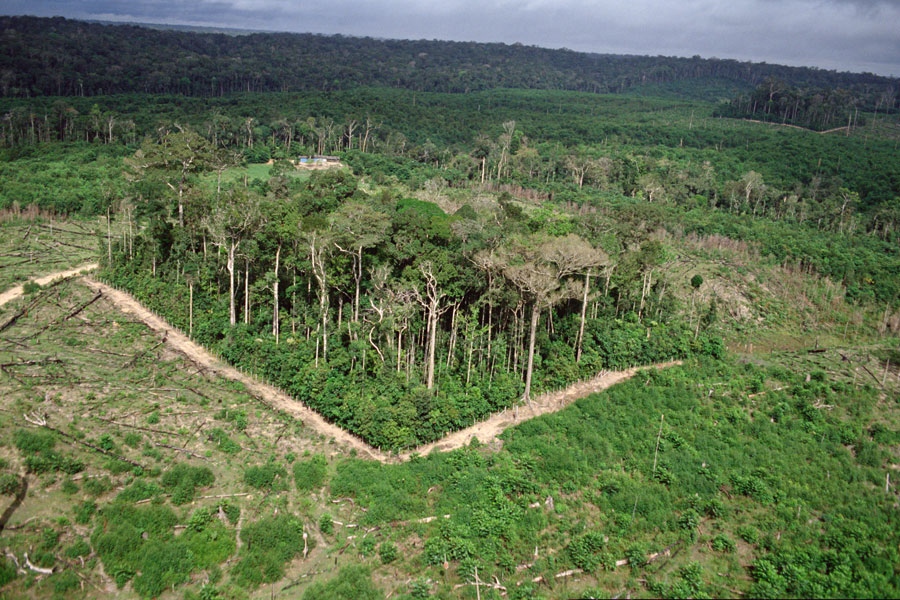
Rainforest loss is fuelling a tsunami of tropical species extinctions. However, not all is doom and gloom. A new study, conducted in the Brazilian Amazon, suggests that ecological cataclysms prompted by the fragmentation of the forest can be reverted by the regeneration of secondary forests, offering a beacon of hope for tropical forest biodiversity across the world.

Rainforest regeneration rescues bat communities in aftermath of fragmentation
Credit: Mark Moffett/ Minden Pictures/National Geographic Stock
The international team of researchers found that species strongly associated with primary forest were heavily depleted after 15 years of man-made disruption including the burning and clearing of forest stands,

However, 30 years down the line, and with the regeneration of secondary regrowth, many of the species that had abandoned the area had made a comeback.

"If you compare the time periods, it is apparent that taking a long-term view is paramount to uncovering the complexity of biodiversity in human-modified landscapes," said senior researcher Dr. Christoph Meyer, lecturer in global ecology and conservation at the University of Salford.

The study, published in Nature: Scientific Reports, measured the impacts of forest break-up of 50 species of bat (approx. 6,000 animals).

Bats comprise roughly one fifth of all mammal species and display wide variation in foraging behaviour and habitat use, making them an excellent model group for the research.

"The responses exhibited by bats offer important insights into the responses of other taxonomic groups." says Ricardo Rocha, lead author of the study from the University of Lisbon.

"The recovery that we have documented mirrors the patterns observed for beetle and bird communities within the Amazon.

"These parallel trends reinforce the idea that the benefits of forest regeneration are widespread, and suggest that habitat restoration can ameliorate some of the harm inflicted by humans on tropical wildlife", he adds.

The results of the current study contrast with the catastrophic faunal declines observed during a similar time window in rodent communities in the 'forest islands' of the Chiew Larn reservoir in Thailand.

"The recovery observed at the Amazon was mostly due to the recolonization of previously deforested areas and forest fragments by old-growth specialist bats. This recolonization is likely attributable to an increased diversity and abundance of food resources in areas now occupied by secondary forest, fulfilling the energetic requirements of a larger set of species", explains Rocha.

However, the short-term nature of most studies has substantially impaired the capacity of researchers to properly capture the intricate time-related complexities associated with the effects of forest fragmentation on wildlife.

Source: University of Salford [February 28, 2018]

Read more

Monday, 26 February 2018

Humans changed the ecosystems of Central Africa more than 2,600 years ago


Fields, streets and cities, but also forests planted in rank and file, and dead straight rivers: humans shape nature to better suit their purposes, and not only since the onset of industrialization. Such influences are well documented in the Amazonian rainforest. On the other hand, the influence of humans was debated in Central Africa where major interventions seem to have occurred there 2,600 years ago: Potsdam geoscientist Yannick Garcin and his team have published a report on their findings in the Proceedings of the National Academy of Sciences. The research team examined lake sediments in southern Cameroon to solve the riddle of the "rainforest crisis." They found that the drastic transformation of the rainforest ecosystem at this time wasn't a result of climatic change, it was humankind.

Humans changed the ecosystems of Central Africa more than 2,600 years ago
Farming activities in North-West Region of Cameroon [Credit: Better World Cameroon]
More than 20 years ago, the analysis of lake sediments from Lake Barombi in southern Cameroon showed that older sediment layers mainly contained tree pollen reflecting a dense forested environment. In contrast, the newer sediments contained a significant proportion of savannah pollen: the dense primitive forest quickly transformed into savannahs around 2,600 years ago, followed by an equally abrupt recovery of the forest approximately 600 years later. For a long time, the most probable cause of this sudden change, dubbed the "rainforest crisis," was thought to be climate change brought about by a decrease in precipitation amount and increase in precipitation seasonality. Despite some controversy, the origin of the rainforest crisis was thought to be settled.

Humans changed the ecosystems of Central Africa more than 2,600 years ago
High volumes of precipitation in the region (over 3,000 mm annually) have ensured that the lake has not dried out over
the millenia. This heavy rainfall has created large volumes of sediment, which are then washed into the lake.
These circumstances make it possible to perform sediment analyses with the utmost precision
[Credit: B. Brademann/GFZ]
Yet Garcin, a postdoctoral researcher at the University of Potsdam, and his international team of scientists from UP, CEREGE, IRD, ENS Lyon, GFZ, MARUM, AMU, AWI, and from Cameroon suspected that other causes could have led to the ecosystem's transformation. By reconstructing both vegetation and climate change independently -- through stable isotope analysis of plant waxes, molecular fossils preserved in the sediment -- the team confirmed that there was a large change in vegetation during the rainforest crisis, but indicated that this was not accompanied by a change in precipitation.

"The rainforest crisis is proven, but it cannot be explained by a climate change," says Garcin. "In fact, in over 460 archaeological finds in the region, we have found indications that humans triggered these changes in the ecosystem." Archaeological remains older than 3,000 years are rare in Central Africa. Around 2,600 years ago, coincident with the rainforest crisis, the number of sites increased significantly, suggesting a rapid human population growth -- probably related to the expansion of the Bantu-speaking peoples in Central Africa. This period also saw the emergence of pearl millet cultivation, oil palm use, and iron metallurgy in the region.

Humans changed the ecosystems of Central Africa more than 2,600 years ago
This floating platform can be completely taken apart and transported overseas. The platform enabled the collection of
sediment samples in the approximately 100-meter-deep Lake Barombi, which were then analyzed in the laboratory
[Credit: Y. Garcin/University of Potsdam]
"The combination of regional archaeological data and our results from the sediments of Lake Barombi shows convincingly that humans strongly impacted the tropical forests of Central Africa thousands of years ago, and left detectable anthropogenic footprints in geological archives," says Dirk Sachse at the Helmholtz Center Potsdam -- Research Center for Geosciences (GFZ). Sachse was one of the major contributors to the development of the method for analyzing plant wax molecular fossils (termed biomarkers).

"We are therefore convinced that it was not climate change that caused the rainforest crisis 2,600 years ago, but it was the growing populations that settled in the region and needed to clear the forest for exploiting arable land," says Garcin. "We are currently observing a similar process underway in many parts of Africa, South America, and Asia." But the work of Garcin and his team also shows that nature has powerful regenerative abilities. When anthropogenic pressure decreased 2,000 years ago forest ecosystems reconstituted, but not necessarily as before: as in the Amazonian rainforest, field studies show that the presence of certain species is very often related to past human activity.

Source: GFZ GeoForschungsZentrum Potsdam, Helmholtz Centre [February 26, 2018]

Read more

Life in world's driest desert seen as sign of potential life on Mars


For the first time, researchers have seen life rebounding in the world's driest desert, demonstrating that it could also be lurking in the soils of Mars.

Life in world's driest desert seen as sign of potential life on Mars
Hyperarid core of the Atacama Desert [Credit: Dirk Schulze-Makuch]
Led by Washington State University planetary scientist Dirk Schulze-Makuch, an international team studied the driest corner of South America's Atacama Desert, where decades pass without any rain.

Scientists have long wondered whether microbes in the soil of this hyperarid environment, the most similar place on Earth to the Martian surface, are permanent residents or merely dying vestiges of life, blown in by the weather.

In a new study published in the Proceedings of the National Academy of Sciences, Schulze-Makuch and his collaborators reveal that even the hyper-arid Atacama Desert can provide a habitable environment for microorganisms.

The researchers found that specialized bacteria are able to live in the soil, going dormant for decades, without water and then reactivating and reproducing when it rains.

"It has always fascinated me to go to the places where people don't think anything could possibly survive and discover that life has somehow found a way to make it work," Schulze-Makuch said. "Jurassic Park references aside, our research tell us that if life can persist in Earth's driest environment there is a good chance it could be hanging in there on Mars in a similar fashion."

The dry limit of life

When Schulze-Makuch and his collaborators went to the Atacama for the first time in 2015 to study how organisms survive in the soil of Earth's driest environment, the craziest of things happened. It rained.

After the extremely rare shower, the researchers detected an explosion of biological activity in the Atacama soil.

Life in world's driest desert seen as sign of potential life on Mars
These are the surfaces of Mars and the Atacama Desert [Credit: NASA (left) / Alessandro Airo, TU Berlin (right)]
They used sterilized spoons and other delicate instrumentation to scoop soil samples from various depths and then performed genomic analyses to identify the different microbial communities that were reproducing in the samples. The researchers found several indigenous species of microbial life that had adapted to live in the harsh environment.

The researchers returned to the Atacama in 2016 and 2017 to follow up on their initial sampling and found that the same microbial communities in the soil were gradually reverting to a dormant state as the moisture went away.

"In the past researchers have found dying organisms near the surface and remnants of DNA but this is really the first time that anyone has been able to identify a persistent form of life living in the soil of the Atacama Desert," Schulze-Makuch said. "We believe these microbial communities can lay dormant for hundreds or even thousands of years in conditions very similar to what you would find on a planet like Mars and then come back to life when it rains."

Implications for life on Mars

While life in the driest regions of Earth is tough, the Martian surface is an even harsher environment.

It is akin to a drier and much colder version of the Atacama Desert. However it wasn't always this way.

Billions of years ago, Mars had small oceans and lakes where early lifeforms may have thrived. As the planet dried up and grew colder, these organisms could have evolved many of the adaptations lifeforms in the Atacama soil use to survive on Earth, Schulze-Makuch said.

"We know there is water frozen in the Martian soil and recent research strongly suggests nightly snowfalls and other increased moisture events near the surface," he said. "If life ever evolved on Mars, our research suggests it could have found a subsurface niche beneath today's severely hyper-arid surface."

Next Steps

On March 15, Schulze-Makuch is returning to the Atacama for two weeks to investigate how the Atacama's native inhabitants have adapted to survive. He said his research team also would like to look for lifeforms in the Don Juan Pond in Antarctica, a very shallow lake that is so salty it remains liquid even at temperatures as low as -58 degrees Fahrenheit.

"There are only a few places left on Earth to go looking for new lifeforms that survive in the kind of environments you would find on Mars," Schulze-Makuch said. "Our goal is to understand how they are able to do it so we will know what to look for on the Martian surface."

Author: Will Ferguson | Source: Washington State University [February 26, 2018]

Read more

Wednesday, 21 February 2018

Theory suggests root efficiency, independence drove global spread of flora


A new theory of plant evolution suggests that the 400 million-year drive of flora across the globe may not have been propelled by the above-ground traits we can see easily, but by underground adaptations that allowed plants to become more efficient and independent.

Theory suggests root efficiency, independence drove global spread of flora
Researchers from Princeton University and the Chinese Academy of Sciences have posed a theory of plant evolution based
on root adaptations that allowed plants to become more efficient and independent. The cross sections above show that the
roots of plants such as the subtropical oak species Lithocarpus chintungensis (largest cross section, center left) and the
tropical species Parashorea chinensis (lower-right of largest cross section) retained their ancestral thickness and reliance
on the symbiotic fungi (purple ring) that surround the root to help it obtain nutrients. As plant species spread from their
nutrient-rich tropical origins, however, the root tips of plants such as the desert shrub species Tamarix ramosissima
(left of largest cross section) evolved to be thinner so they could more efficiently explore soil for nutrients, and they
have less dependence on symbiotic fungi [Credit: Zeqing Ma, Chinese Academy of Sciences]
As plant species spread north and south from their nutrient-rich tropical beginnings, the fine tips of their roots became narrower and more widespread to help them explore increasingly poor soil for vital nutrients, according to a study in the journal Nature led by researchers from Princeton University and the Chinese Academy of Sciences (CAS) in Beijing. In addition, as plants spread into unpredictable environments such as arid deserts they grew less dependent on the symbiotic fungi -- or mycorrhiza -- that colonize roots and help host plants obtain the essential plant nutrients nitrogen and phosphorous.

The findings reconsider how plants adapted to new environments as they evolved, said corresponding author Lars Hedin, the George M. Moffett Professor of Biology and chair and professor of ecology and evolutionary biology and the Princeton Environmental Institute. Scientists have in the past focused on above-ground characteristics, primarily leaf traits and the efficiency with which plants absorb sunlight for photosynthesis, he said.

Instead, Hedin said, he and his colleagues have found for the first time that root diameter and reliance on fungi -- or the lack thereof -- are the traits that most consistently characterize the plant community across entire biomes, which are large distinct communities of animals and plants such as a desert, temperate forest or savanna.

"These are the secret strategies that plants have used over time to take over the world," Hedin said. "Our goal was to unlock the understanding of those strategies, and our findings offer a new global theory for plant evolution. Hidden underground there has been a tremendous game of survival-of-the-fittest and we are fortunate to have the first-ever view of the science of that game.

"This work has major implications for conservation and our stewardship of the plant world," Hedin continued. "It provides some of the hidden, below-ground rules by which plants survive and spread. It's a global view of plant evolution at a time when global rules are essential for building climate models and understanding the biosphere."

Mingzhen Lu, first Princeton author and a graduate student in Hedin's research group, said that if root traits do in fact determine a plant's ability to withstand a particular environment, these findings could be valuable in conserving endangered species or projecting how plants might adapt to climate change.

"Our findings simplify how we can practically characterize a plant's strategy for obtaining nutrients," Lu said. "Knowing their underlying nutrient strategy will help us know how to preserve them, or know the conditions under which they could or could not survive."

Kurt Pregitzer, the Thomas Reveley Professor and dean of the College of Natural Resources at the University of Idaho, said this work could be especially useful in combating invasive species, which, in a highly mobile world, increasingly threaten biodiversity. Pregitzer is familiar with the research but had no role in it.

"Invasive species cause widespread displacement of native plants and tremendous economic impacts across the globe," Pregitzer said. "This study may open entirely new lines of scientific investigation that help us better understand how invasive-plant root systems help these exotic species outcompete native plants."

Theory suggests root efficiency, independence drove global spread of flora
The researchers spent two years examining a database of root traits consisting of 369 species from seven biomes (above):
desert, grassland, Mediterranean, boreal, temperate, subtropical and tropical. Woody biomes are identified as shades
of tan-to-yellow and non-woody biomes are in shades of green. The researchers found that plants in tropical (light orange)
and subtropical biomes (beige) exhibited the largest range of root-tip diameters, from less than 0.25 millimeters up to
1 millimeter. These plants rely on soil fungi to provide nutrients, a similar strategy to that of Earth's earliest land plants.
Plants in biomes characterized by poor soil, cold winters and/or infrequent precipitation have a narrow root-diameter
range ideal for that environment. The desert (light green) and grassland (green) species studied all had root
diameters of less than 0.25 millimeters [Credit: Lars Hedin and Mingzhen Lu, Department
of Ecology and Evolutionary Biology]
The Nature paper is unique for its scale and careful application of scientific methods, Pregitzer said. "This study is the first conducted across a wide range of terrestrial environments and it demonstrates that plant species have evolved root strategies that are conserved within corresponding families, genera and species," he said. "These root traits likely facilitate plant success in highly competitive natural ecosystems."

The researchers spent two years examining a uniquely large database of root traits consisting of 369 species from seven biomes: desert, grassland, Mediterranean, boreal, temperate, subtropical and tropical.

These data were compiled over the course of a decade in the lab of late co-corresponding author Dali Guo, a professor at CAS' Institute of Geographic Sciences and Natural Resources Research. First author Zeqing Ma is a research associate in Guo's lab and co-author Xiangliang Xu is a colleague of Guo's. The paper's co-authors also included root experts Richard Bardgett, professor of ecology at the University of Manchester in the UK; David Eissenstat, professor of woody plant physiology at Pennsylvania State University; and M. Luke McCormack, a research associate at the University of Minnesota.

The researchers found that plants in tropical and subtropical biomes exhibited the largest diameter range for the finest root tips that forage for nutrients, from less than 0.25 millimeters up to 1 millimeter. These thicker-rooted plants employ what the authors call a "conservative" strategy -- similar to that of Earth's earliest land plants -- that relies on the soil fungi prevalent in wet, warm tropical and subtropical soils to provide nutrients. The researchers refer to nutrient-rich soil in consistently sultry environs as "predictable."

Meanwhile, fine-root diameters in "unpredictable" biomes characterized by poor soil, cold winters and/or infrequent precipitation fall within a narrower range ideal for that environment. For instance, the desert and grassland species studied all had root diameters of less than 0.25 millimeters. Root tips in these biomes evolved to be thinner so they could more efficiently explore soil for every unit of carbon the plant expends, and they have less dependence on symbiotic fungi.

The extensive data the researchers used allowed them to explore the evolution of plant roots to an extent never before possible, Lu said. "Below-ground plant ecology has been understudied, limited by a paucity of data," he said. "Because of that, the governing rule of what's going on below ground has been very poorly known."

"Thus far," Hedin added, "everybody has quite naturally tried to understand how plants are organized by looking at above-ground traits. But our findings do not follow the above-ground theories -- that was a surprise."

The study reveals that root and leaf evolution have followed different paths, Pregitzer said. Plant ecologists have known that the form and function of leaves are essential to a plant species' success, but "we did not understand if this was true across the tremendous diversity of plant root systems," he said.

"Interestingly, little was known about how plant roots have evolved to facilitate success in their native habitats," Pregitzer said. "Now we know that leaves and roots have responded to different evolutionary selective pressures, and we can start building a better understanding of how root form and function drive plant success within the tremendous biological diversity we see on Earth."

The findings align with ideas explored at Princeton that suggest that plants -- rather than being passive features of their environment -- have actively adapted to and shaped their environments, Hedin said. He was senior author of a 2015 paper in Nature Plants that suggested that ecosystems take their various forms because plants behave in ways that not only benefit themselves but also determine the productivity and composition of their habitats.

"Over evolutionary time, it's as if plants have actively explored the best strategies to safeguard their own survival," Hedin said. He and Lu brought this perspective to the database put together by their colleagues at CAS.

"We understood from a plant perspective how to bring evolutionary questions to their unique global dataset," Hedin said. "It was this great collaboration where we combined new ideas with years of painstaking fieldwork to produce this great result. It couldn't have happened without both sides."

Source: Princeton University [February 21, 2018]
Read more

First evidence of surprising ocean warming around Galápagos corals


The ocean around the Galápagos Islands has been warming since the 1970s, according to a new analysis of the natural temperature archives stored in coral reefs.

First evidence of surprising ocean warming around Galápagos corals
Diane Thompson (left), Roberto Pépolas (center) and Alexander Tudhope (right) use a hydraulic drill to take a core
from a Porites lobata coral head near Wolf Island in the Galápagos [Credit: Jenifer Suarez, Cole lab]
The finding surprised the University of Arizona-led research team, because the sparse instrumental records for sea surface temperature for that part of the eastern tropical Pacific Ocean did not show warming.

"People didn't know that the Galápagos or eastern Pacific was warming. People theorized or suggested it was cooling," said lead author Gloria Jimenez, a UA doctoral candidate in geosciences.

Scientists thought strong upwelling of colder deep waters spared the region from the warming seen in other parts of the Pacific, she said.

"My colleagues and I show that the ocean around the northern Galápagos Islands is warming and has been since the 1970s," Jimenez said. The research is part of her doctoral work.

Jimenez studied cores taken from coral heads in the uninhabited northern part of Galápagos National Park. The cores represented the years 1940 to 2010. Corals lay down seasonal growth layers that serve as a natural archive of ocean temperatures.

Her analysis revealed that from 1979 to 2010, regional ocean temperatures increased almost 0.4 degrees F (0.2 degrees C) per decade -- about 1.1 degrees F (0.6 degrees C) overall.

The very strong El Niño of 1982-83 temporarily warmed the surrounding ocean so much that most of the corals in the southern part of the Galápagos died, said co-author Julia Cole, who collected the coral cores while she was a faculty member at the UA.

She is concerned about ocean warming around the northern Galápagos and parts of the eastern tropical Pacific.

"Warming in this area is particularly disturbing, because it's the only place that reefs have persisted in the Galápagos. This suggests those reefs are more vulnerable than we thought," said Cole, who is now a professor of earth and environmental sciences at the University of Michigan.

First evidence of surprising ocean warming around Galápagos corals
Cores collected in 2010 from a Porites lobate coral near Wolf Island in Galapagos Islands. The core,
now broken into three pieces, is 3.5 inches (8.9 cm) in diameter [Credit: Julia Cole © 2010]
The research paper, "Northern Galápagos corals reveal twentieth century warming in the eastern tropical Pacific," by Jimenez, Cole and their co-authors, Diane M. Thompson of Boston University in Massachusetts and Alexander W. Tudhope of the University of Edinburgh in the UK, is published in Geophysical Research Letters.

The National Science Foundation, the UK Natural Environment Research Council and the Philanthropic Education Organization Fellowship funded the research.

For 30 years, Cole, a paleoclimatologist, has been studying climate change and the El Niño/ La Niña climate cycle.

In 1989 she went to the Galápagos hoping to use the natural climate archives stored in corals to develop a long-term record of El Niño, but found that none of the large, old corals others reported had survived the intense warming of the 1982-83 El Niño.

"We went from site to site -- and they were all gone," Cole said. "One of my co-workers said, 'There used to be corals here, and now all I see is sand.'"

Years later, she heard large corals were still alive near Wolf Island in the remote northern part of the Galápagos archipelago, so in 2010 she followed up on the tip with a team that included co-authors Tudhope and Thompson, then a UA graduate student.

The team members dove to the reef and took several cores from large, blobby dome-shaped Porites lobata corals using an underwater hydraulic drill powered by vegetable oil. The three-and-a-half-inch (8.9 cm) diameter cores ranged from two to three feet long and had annual bands 0.4 to 0.8 inches (1-2 cm) wide. Each core showed damage from when the coral stopped growing during the 1982-83 El Niño and then started growing again.

Jimenez used chemical analysis to tease temperature information out of two of those coral cores.

First evidence of surprising ocean warming around Galápagos corals
After removing two cores from this Porites lobata coral colony near Wolf Island in the Galápagos, the University of
Arizona-led team of researchers plugged the drill holes. The cement plugs help the coral grow over the holes
and keep out animals out of the holes [Credit: Diane Thompson © 2010]
Coral skeletons are made mostly of calcium carbonate. However, corals sometimes substitute the element strontium for the calcium. Corals substitute more strontium when the water is cold and less when the water is warm, so the strontium/calcium ratio of a bit of skeleton can reveal what the water temperature was when that piece of skeleton formed.

Jimenez used a little drill bit to take a tiny sample every millimeter for the length of each core. She took 10 to 20 samples from each annual band of each core and analyzed the samples for the strontium/calcium ratio using atomic emission spectrometry.

She then used that information to create a continuous record of the region's ocean temperature from 1940 to 2010.

Because the El Niño/ La Niña climate cycle generates large fluctuations in ocean temperatures around the Galápagos and in the eastern tropical Pacific, long-term changes can be hard to spot.

Jimenez wanted to determine whether the region's ocean temperature changed significantly from 1940 to 2010. Therefore she analyzed her Galápagos coral temperature chronologies alongside published coral temperature chronologies from islands farther north and west and instrumental sea surface temperature records from the southern Galápagos town of Puerto Ayora and the Peruvian coastal town of Puerto Chicama.

Jimenez said her research convinces her that the ocean around the Galápagos and much of the eastern tropical Pacific is warming. She's concerned about the effect of warming seas.

"The Galápagos National Park has been designated a World Heritage Site because it's a special and unique place," Jimenez said. "Losing the corals would be an enormous blow to the underwater biodiversity."

Jimenez's next project involves analyzing an eight-foot-long Galápagos coral core she collected in 2015 that goes back to about 1850.

Author: Mari N. Jensen | Source: University of Arizona [February 21, 2018]

Read more

Tuesday, 20 February 2018

Extreme-altitude birds evolved same trait via different mutations


On the Himalayan-enveloped Tibetan Plateau and the Altiplano plateau of South America - the world's two highest tabletops - a select few bird species survive on 35 to 40 percent less oxygen than at sea level.

Extreme-altitude birds evolved same trait via different mutations
A rendering of avian hemoglobin, the blood protein that captures and delivers oxygen
throughout the body [Credit: PNAS]
All extreme-altitude birds have evolved especially efficient systems for delivering that precious oxygen to their tissues. But a new study led by the University of Nebraska-Lincoln and Chinese Academy of Sciences has found that these birds often evolved different blueprints for assembling the proteins - hemoglobins - that actually capture oxygen.

Published in the Proceedings of the National Academy of Sciences, the study found that many species from the two plateaus underwent different mutations to produce the same result: hemoglobins more adept at snaring oxygen from the lungs before sharing it with the other organs that depend on it.

Those mutational differences often emerged even among closely related species residing on the same plateau, the study reported.

"You could imagine, just because of the different ancestral starting points, that the Tibetan birds maybe all went one (mutational) route, and the Andean birds typically did things a different way," said co-author Jay Storz, Susan J. Rosowski Professor of biological sciences at Nebraska. "But that's not what we saw. Across the board, there weren't really any region-specific patterns.

"In both cases, it seems like there were many different ways of evolving a similar alteration of protein function."

Extreme-altitude birds evolved same trait via different mutations
Jay Storz stands on the Tibetan Plateau, more than 15,000 feet above sea level. Storz and his colleagues have shown that
many high-altitude bird species underwent different mutations to develop the same adaptation: hemoglobin better at
capturing and distributing scarce oxygen [Credit: University of Nebraska-Lincoln]
Like all proteins, hemoglobin consists of intricately folded chains of amino acids. The interactions among those amino acids dictate the structure of a protein, which in turn determines its properties - how readily it binds with and releases oxygen, for instance. But a mutation can effectively swap out an amino acid for a chemically distinct version at the same site in the protein, potentially modifying its behavior in the process.

After comparing the ancestral vs. modern hemoglobin proteins of nine species that inhabit the Tibetan Plateau, the team did identify two cases in which distantly related species underwent identical, functionally important mutations. Yet in the other instances, species evolved different ways to build a better hemoglobin.

The latest findings reinforce a 2016 Storz-led study published in the journal Science, which was the first to establish that vertebrate species can follow different molecular-level paths to reach the same adaptation. That study, which investigated birds only from the Andes, inspired the team to follow up with its comparison of Andean and Himalayan species.

"Birds that have adapted to high-altitude conditions from all these different mountain ranges have repeatedly evolved hemoglobin with elevated oxygen affinities," Storz said. "At that (functional) level, everything is highly repeatable, and there's a very striking pattern of convergent evolution. But in terms of the actual molecular underpinnings, there's far less predictability, and it's clear that there are many possible changes that can produce the same functional outcome."

Source: University of Nebraska-Lincoln [February 20, 2018]

Read more

Land use change has warmed Earth's surface


Natural ecosystems play a crucial role in helping combat climate change, air pollution and soil erosion. A new study by a team of researchers from the Joint Research Centre, the European Commission's science and knowledge service, sheds light on another, less well-known aspect of how these ecosystems, and forests in particular, can protect our planet against global warming.

Land use change has warmed Earth's surface
Changes to the way land is used is having a knock-on effect on temperatures
[Credit: European Commission Joint Research Centre]
The research team used satellite data to analyse changes in global vegetation cover from 2000 to 2015 and link these to changes in the surface energy balance. Modifying the vegetation cover alters the surface properties - such as the amount of heat dissipated by water evaporation and the level of radiation reflected back into space - which has a knock-on effect on local surface temperature. Their analysis reveals how recent land cover changes have ultimately made the planet warmer.

"We knew that forests have a role in regulating surface temperatures and that deforestation affects the climate, but this is the first global data-driven assessment that has enabled us to systematically map the biophysical mechanisms behind these processes", explains Gregory Duveiller, lead author of the study.

The study also looked beyond deforestation, analysing changes between different types of vegetation, from evergreen forests to savannas, shrublands, grasslands, croplands and wetlands. However, they found that the removal of tropical evergreen forest for agricultural expansion is the vegetation cover transition most responsible for local increases in surface temperature.

From a greenhouse gas perspective, the cutting of forests might only affect the global climate in the mid-to-long term. However, the scientists point out that local communities living in areas where the trees are cut will immediately be exposed to rising temperatures.

The findings are published in Nature Communications.

Source: European Commission Joint Research Centre [February 20, 2018]

Read more