Showing posts with label Natural Heritage. Show all posts

Wednesday, 28 February 2018

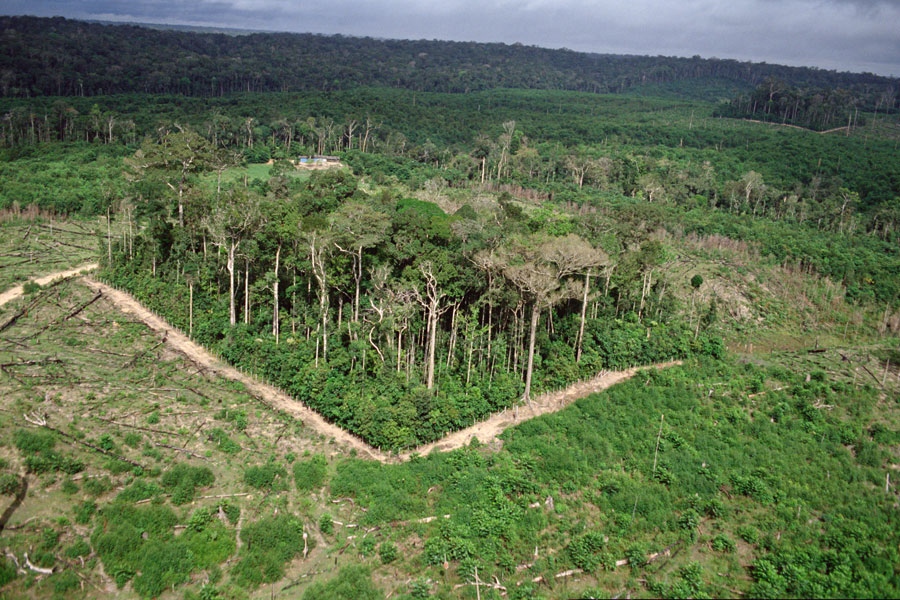
Rainforest regeneration rescues bat communities in aftermath of fragmentation


Rainforest loss is fuelling a tsunami of tropical species extinctions. However, not all is doom and gloom. A new study, conducted in the Brazilian Amazon, suggests that ecological cataclysms prompted by the fragmentation of the forest can be reverted by the regeneration of secondary forests, offering a beacon of hope for tropical forest biodiversity across the world.

Rainforest regeneration rescues bat communities in aftermath of fragmentation
Credit: Mark Moffett/ Minden Pictures/National Geographic Stock
The international team of researchers found that species strongly associated with primary forest were heavily depleted after 15 years of man-made disruption including the burning and clearing of forest stands,

However, 30 years down the line, and with the regeneration of secondary regrowth, many of the species that had abandoned the area had made a comeback.

"If you compare the time periods, it is apparent that taking a long-term view is paramount to uncovering the complexity of biodiversity in human-modified landscapes," said senior researcher Dr. Christoph Meyer, lecturer in global ecology and conservation at the University of Salford.

The study, published in Nature: Scientific Reports, measured the impacts of forest break-up of 50 species of bat (approx. 6,000 animals).

Bats comprise roughly one fifth of all mammal species and display wide variation in foraging behaviour and habitat use, making them an excellent model group for the research.

"The responses exhibited by bats offer important insights into the responses of other taxonomic groups." says Ricardo Rocha, lead author of the study from the University of Lisbon.

"The recovery that we have documented mirrors the patterns observed for beetle and bird communities within the Amazon.

"These parallel trends reinforce the idea that the benefits of forest regeneration are widespread, and suggest that habitat restoration can ameliorate some of the harm inflicted by humans on tropical wildlife", he adds.

The results of the current study contrast with the catastrophic faunal declines observed during a similar time window in rodent communities in the 'forest islands' of the Chiew Larn reservoir in Thailand.

"The recovery observed at the Amazon was mostly due to the recolonization of previously deforested areas and forest fragments by old-growth specialist bats. This recolonization is likely attributable to an increased diversity and abundance of food resources in areas now occupied by secondary forest, fulfilling the energetic requirements of a larger set of species", explains Rocha.

However, the short-term nature of most studies has substantially impaired the capacity of researchers to properly capture the intricate time-related complexities associated with the effects of forest fragmentation on wildlife.

Source: University of Salford [February 28, 2018]

Read more

Monday, 26 February 2018

King penguins may be on the move very soon


More than 70 percent of the global King penguin population, currently forming colonies in Crozet, Kerguelen and Marion sub-Antarctic islands, may be nothing more than a memory in a matter of decades, as global warming will soon force the birds to move south, or disappear. This is the conclusion of a study published in the journal Nature Climate Change and performed by an international team of researchers.

King penguins may be on the move very soon
More than 70 percent of the global King penguin population may be nothing more than a memory in a matter of decades,
 as global warming will soon force the birds to move south, or disappear [Credit: Robin Cristofari]
"The main issue is that there is only a handful of islands in the Southern Ocean and not all of them are suitable to sustain large breeding colonies" says Robin Cristofari, first author of the study, from the Institut Pluridisciplinaire Hubert Curien (IPHC/CNRS/University of Strasbourg) and the Centre Scientifique de Monaco (CSM).

King penguins are in fact picky animals: in order to form a colony where they can mate, lay eggs and rear chicks over a year, they need tolerable temperature all year round, no winter sea ice around the island, and smooth beach of sand or pebbles. But, above all, they need an abundant and reliable source of food close by to feed their chicks. For millennia, this seabird has relied on the Antarctic Polar Front, an upwelling front in the Southern Ocean concentrating enormous amounts of fish on a relatively small area.

Yet, due to climate change, this area is drifting south, away from the islands where most King penguins currently live. Parents are then forced to swim farther to find food, while their progeny is waiting, fasting longer and longer on the shore. This study predicts that, for most colonies, the length of the parents' trips to get food will soon exceed the resistance to starvation of their offspring, leading to massive King penguin crashes in population size, or, hopefully, relocation.

King penguins may be on the move very soon
King penguins are picky animals [Credit: Celine LeBohec]
Using the information hidden away in the penguin's genome, the research team has reconstructed the changes in the worldwide King penguin population throughout the last 50,000 years, and discovered that past climatic changes, causing shifts in marine currents, sea-ice distribution and Antarctic Polar Front location, have always been linked to critical episodes for the King penguins. However, hope is not lost yet: King penguins have already survived such crises several times (the last time was 20 thousand years ago), and they may be particularly good at it.

"Extremely low values in indices of genetic differentiation told us that all colonies are connected by a continuous exchange of individuals," says Emiliano Trucchi formerly at the University of Vienna and now at the University of Ferrara, one of the coordinator of the study. "In other words, King penguins seem to be able to move around quite a lot to find the safest breeding locations when things turn grim."

But there is a major difference this time: for the first time in the history of penguins, human activities are leading to rapid and/or irreversible changes in the Earth system, and remote areas are no exception. In addition to the strongest impact of climate change in Polar Regions, Southern Ocean is now subject to industrial fishing, and penguins may soon have a very hard time fighting for their food.

King penguins may be on the move very soon
Penguins form colonies in Crozet, Kerguelen and Marion sub-Antarctic islands [Credit: Celine LeBohec]
"There are still some islands further south where King penguins may retreat," notes Celine Le Bohec (IPHC/CNRS/University of Strasbourg and CSM), leader of the programme 137 of the French Polar Institut Paul-Emile Victor within which the study was initiated, "but the competition for breeding sites and for food will be harsh, especially with the other penguin species like the Chinstrap, Gentoo or Adelie penguins, even without the fisheries. It is difficult to predict the outcome, but there will surely be losses on the way. If we want to save anything, proactive and efficient conservation efforts but, above all, coordinated global action against global warming should start now."

Source: University of Vienna [February 26, 2018]

Read more

Wednesday, 21 February 2018

First evidence of surprising ocean warming around Galápagos corals


The ocean around the Galápagos Islands has been warming since the 1970s, according to a new analysis of the natural temperature archives stored in coral reefs.

First evidence of surprising ocean warming around Galápagos corals
Diane Thompson (left), Roberto Pépolas (center) and Alexander Tudhope (right) use a hydraulic drill to take a core
from a Porites lobata coral head near Wolf Island in the Galápagos [Credit: Jenifer Suarez, Cole lab]
The finding surprised the University of Arizona-led research team, because the sparse instrumental records for sea surface temperature for that part of the eastern tropical Pacific Ocean did not show warming.

"People didn't know that the Galápagos or eastern Pacific was warming. People theorized or suggested it was cooling," said lead author Gloria Jimenez, a UA doctoral candidate in geosciences.

Scientists thought strong upwelling of colder deep waters spared the region from the warming seen in other parts of the Pacific, she said.

"My colleagues and I show that the ocean around the northern Galápagos Islands is warming and has been since the 1970s," Jimenez said. The research is part of her doctoral work.

Jimenez studied cores taken from coral heads in the uninhabited northern part of Galápagos National Park. The cores represented the years 1940 to 2010. Corals lay down seasonal growth layers that serve as a natural archive of ocean temperatures.

Her analysis revealed that from 1979 to 2010, regional ocean temperatures increased almost 0.4 degrees F (0.2 degrees C) per decade -- about 1.1 degrees F (0.6 degrees C) overall.

The very strong El Niño of 1982-83 temporarily warmed the surrounding ocean so much that most of the corals in the southern part of the Galápagos died, said co-author Julia Cole, who collected the coral cores while she was a faculty member at the UA.

She is concerned about ocean warming around the northern Galápagos and parts of the eastern tropical Pacific.

"Warming in this area is particularly disturbing, because it's the only place that reefs have persisted in the Galápagos. This suggests those reefs are more vulnerable than we thought," said Cole, who is now a professor of earth and environmental sciences at the University of Michigan.

First evidence of surprising ocean warming around Galápagos corals
Cores collected in 2010 from a Porites lobate coral near Wolf Island in Galapagos Islands. The core,
now broken into three pieces, is 3.5 inches (8.9 cm) in diameter [Credit: Julia Cole © 2010]
The research paper, "Northern Galápagos corals reveal twentieth century warming in the eastern tropical Pacific," by Jimenez, Cole and their co-authors, Diane M. Thompson of Boston University in Massachusetts and Alexander W. Tudhope of the University of Edinburgh in the UK, is published in Geophysical Research Letters.

The National Science Foundation, the UK Natural Environment Research Council and the Philanthropic Education Organization Fellowship funded the research.

For 30 years, Cole, a paleoclimatologist, has been studying climate change and the El Niño/ La Niña climate cycle.

In 1989 she went to the Galápagos hoping to use the natural climate archives stored in corals to develop a long-term record of El Niño, but found that none of the large, old corals others reported had survived the intense warming of the 1982-83 El Niño.

"We went from site to site -- and they were all gone," Cole said. "One of my co-workers said, 'There used to be corals here, and now all I see is sand.'"

Years later, she heard large corals were still alive near Wolf Island in the remote northern part of the Galápagos archipelago, so in 2010 she followed up on the tip with a team that included co-authors Tudhope and Thompson, then a UA graduate student.

The team members dove to the reef and took several cores from large, blobby dome-shaped Porites lobata corals using an underwater hydraulic drill powered by vegetable oil. The three-and-a-half-inch (8.9 cm) diameter cores ranged from two to three feet long and had annual bands 0.4 to 0.8 inches (1-2 cm) wide. Each core showed damage from when the coral stopped growing during the 1982-83 El Niño and then started growing again.

Jimenez used chemical analysis to tease temperature information out of two of those coral cores.

First evidence of surprising ocean warming around Galápagos corals
After removing two cores from this Porites lobata coral colony near Wolf Island in the Galápagos, the University of
Arizona-led team of researchers plugged the drill holes. The cement plugs help the coral grow over the holes
and keep out animals out of the holes [Credit: Diane Thompson © 2010]
Coral skeletons are made mostly of calcium carbonate. However, corals sometimes substitute the element strontium for the calcium. Corals substitute more strontium when the water is cold and less when the water is warm, so the strontium/calcium ratio of a bit of skeleton can reveal what the water temperature was when that piece of skeleton formed.

Jimenez used a little drill bit to take a tiny sample every millimeter for the length of each core. She took 10 to 20 samples from each annual band of each core and analyzed the samples for the strontium/calcium ratio using atomic emission spectrometry.

She then used that information to create a continuous record of the region's ocean temperature from 1940 to 2010.

Because the El Niño/ La Niña climate cycle generates large fluctuations in ocean temperatures around the Galápagos and in the eastern tropical Pacific, long-term changes can be hard to spot.

Jimenez wanted to determine whether the region's ocean temperature changed significantly from 1940 to 2010. Therefore she analyzed her Galápagos coral temperature chronologies alongside published coral temperature chronologies from islands farther north and west and instrumental sea surface temperature records from the southern Galápagos town of Puerto Ayora and the Peruvian coastal town of Puerto Chicama.

Jimenez said her research convinces her that the ocean around the Galápagos and much of the eastern tropical Pacific is warming. She's concerned about the effect of warming seas.

"The Galápagos National Park has been designated a World Heritage Site because it's a special and unique place," Jimenez said. "Losing the corals would be an enormous blow to the underwater biodiversity."

Jimenez's next project involves analyzing an eight-foot-long Galápagos coral core she collected in 2015 that goes back to about 1850.

Author: Mari N. Jensen | Source: University of Arizona [February 21, 2018]
Read more

New study brings Antarctic ice loss into sharper focus


A NASA study based on an innovative technique for crunching torrents of satellite data provides the clearest picture yet of changes in Antarctic ice flow into the ocean. The findings confirm accelerating ice losses from the West Antarctic Ice Sheet and reveal surprisingly steady rates of flow from its much larger neighbor to the east.

New study brings Antarctic ice loss into sharper focus
The flow of Antarctic ice, derived from feature tracking of Landsat imagery
[Credit: NASA Earth Observatory]
The computer-vision technique crunched data from hundreds of thousands of NASA-U.S. Geological Survey Landsat satellite images to produce a high-precision picture of changes in ice-sheet motion.

The new work provides a baseline for future measurement of Antarctic ice changes and can be used to validate numerical ice sheet models that are necessary to make projections of sea level. It also opens the door to faster processing of massive amounts of data.

“We’re entering a new age,” said the study’s lead author, cryospheric researcher Alex Gardner of NASA’s Jet Propulsion Laboratory in Pasadena, California. “When I began working on this project three years ago, there was a single map of ice sheet flow that was made using data collected over 10 years, and it was revolutionary when it was published back in 2011. Now we can map ice flow over nearly the entire continent, every year. With these new data, we can begin to unravel the mechanisms by which the ice flow is speeding up or slowing down in response to changing environmental conditions.”

The innovative approach by Gardner and his international team of scientists largely confirms earlier findings, though with a few unexpected twists.

Among the most significant: a previously unmeasured acceleration of glacier flow into Antarctica’s Getz Ice Shelf, on the southwestern part of the continent -- likely a result of ice-shelf thinning.

Speeding up in the west, steady flow in the east

The research, published in the The Cryosphere, also identified the fastest speed-up of Antarctic glaciers during the seven-year study period. The glaciers feeding Marguerite Bay, on the western Antarctic Peninsula, increased their rate of flow by 1,300 to 2,600 feet (400 to 800 meters) per year, probably in response to ocean warming.

Perhaps the research team’s biggest discovery, however, was the steady flow of the East Antarctic Ice Sheet. During the study period, from 2008 to 2015, the sheet had essentially no change in its rate of ice discharge -- ice flow into the ocean. While previous research inferred a high level of stability for the ice sheet based on measurements of volume and gravitational change, the lack of any significant change in ice discharge had never been measured directly.

The study also confirmed that the flow of West Antarctica’s Thwaites and Pine Island glaciers into the ocean continues to accelerate, though the rate of acceleration is slowing.

In all, the study found an overall ice discharge for the Antarctic continent of 1,929 gigatons per year in 2015, with an uncertainty of plus or minus 40 gigatons. That represents an increase of 36 gigatons per year, plus or minus 15, since 2008. A gigaton is one billion tons.

The study found that ice flow from West Antarctica -- the Amundsen Sea sector, the Getz Ice Shelf and Marguerite Bay on the western Antarctic Peninsula -- accounted for 89 percent of the increase.

Computer vision

The science team developed software that processed hundreds of thousands of pairs of images of Antarctic glacier movement from Landsats 7 and 8, captured from 2013 to 2015.

These were compared to earlier radar satellite measurements of ice flow to reveal changes since 2008.

“We’re applying computer vision techniques that allow us to rapidly search for matching features between two images, revealing complex patterns of surface motion,” Gardner said.

Instead of researchers comparing small sets of very high-quality images from a limited region to look for subtle changes, the novelty of the new software is that it can track features across hundreds of thousands of images per year -- even those of varying quality or obscured by clouds -- over an entire continent.

“We can now automatically generate maps of ice flow annually -- a whole year -- to see what the whole continent is doing,” Gardner said.

The new Antarctic baseline should help ice sheet modelers better estimate the continent’s contribution to future sea level rise.

“We’ll be able to use this information to target field campaigns, and understand the processes causing these changes,” Gardner said. “Over the next decade, all this is going to lead to rapid improvement in our knowledge of how ice sheets respond to changes in ocean and atmospheric conditions, knowledge that will ultimately help to inform projections of sea level change.”

Author: Pat Brennan | Source: NASA [February 21, 2018]

Read more

Tuesday, 20 February 2018

Land use change has warmed Earth's surface


Natural ecosystems play a crucial role in helping combat climate change, air pollution and soil erosion. A new study by a team of researchers from the Joint Research Centre, the European Commission's science and knowledge service, sheds light on another, less well-known aspect of how these ecosystems, and forests in particular, can protect our planet against global warming.

Land use change has warmed Earth's surface
Changes to the way land is used is having a knock-on effect on temperatures
[Credit: European Commission Joint Research Centre]
The research team used satellite data to analyse changes in global vegetation cover from 2000 to 2015 and link these to changes in the surface energy balance. Modifying the vegetation cover alters the surface properties - such as the amount of heat dissipated by water evaporation and the level of radiation reflected back into space - which has a knock-on effect on local surface temperature. Their analysis reveals how recent land cover changes have ultimately made the planet warmer.

"We knew that forests have a role in regulating surface temperatures and that deforestation affects the climate, but this is the first global data-driven assessment that has enabled us to systematically map the biophysical mechanisms behind these processes", explains Gregory Duveiller, lead author of the study.

The study also looked beyond deforestation, analysing changes between different types of vegetation, from evergreen forests to savannas, shrublands, grasslands, croplands and wetlands. However, they found that the removal of tropical evergreen forest for agricultural expansion is the vegetation cover transition most responsible for local increases in surface temperature.

From a greenhouse gas perspective, the cutting of forests might only affect the global climate in the mid-to-long term. However, the scientists point out that local communities living in areas where the trees are cut will immediately be exposed to rising temperatures.

The findings are published in Nature Communications.

Source: European Commission Joint Research Centre [February 20, 2018]

Read more

Monday, 19 February 2018

Biodiversity loss raises risk of 'extinction cascades'


New research shows that the loss of biodiversity can increase the risk of "extinction cascades," where an initial species loss leads to a domino effect of further extinctions.

Biodiversity loss raises risk of 'extinction cascades'
Credit: Andreas Haselböck/Senckenberg
The researchers, from the University of Exeter, showed there is a higher risk of extinction cascades when other species are not present to fill the "gap" created by the loss of a species.

Even if the loss of one species does not directly cause knock-on extinctions, the study shows that this leads to simpler ecological communities that are at greater risk of "run-away extinction cascades" with the potential loss of many species.

With extinction rates at their highest levels ever and numerous species under threat due to human activity, the findings are a further warning about the consequences of eroding biodiversity.

"Interactions between species are important for ecosystem (a community of interacting species) stability," said Dr Dirk Sanders, of the Centre for Ecology and Conservation at the University of Exeter's Penryn Campus in Cornwall. "And because species are interconnected through multiple interactions, an impact on one species can affect others as well.

"It has been predicted that more complex food webs will be less vulnerable to extinction cascades because there is a greater chance that other species can step in and buffer against the effects of species loss.

"In our experiment, we used communities of plants and insects to test this prediction."

The researchers removed one species of wasp and found that it led to secondary extinctions of other, indirectly linked, species at the same level of the food web.

This effect was much stronger in simple communities than for the same species within a more complex food web.

Dr Sanders added: "Our results demonstrate that biodiversity loss can increase the vulnerability of ecosystems to secondary extinctions which, when they occur, can then lead to further simplification causing run-away extinction cascades."

The study, supported by France's Sorbonne Université, is published in the journal Proceedings of the National Academy of Sciences.

How extinction cascades work

The loss of a predator can initiate a cascade, such as in the case of wolves, where their extinction on one mountain can cause a large rise in the number of deer. This larger number of deer then eats more plant material than they would have before. This reduction in vegetation can cause extinctions in any species that also relies on the plants, but are potentially less competitive, such as rabbits or insects.

Source: University of Exeter [February 19, 2018]

Read more

Thursday, 15 February 2018

In 16 years, Borneo lost more than 100,000 orangutans


Over a 16-year period, about half of the orangutans living on the island of Borneo were lost as a result of changes in land cover. That's according to estimates reported in Current Biology showing that more than 100,000 of the island's orangutans disappeared between 1999 and 2015.

In 16 years, Borneo lost more than 100,000 orangutans
A Bornean orangutan [Credit: Marc Ancrenaz]
Many of those losses were apparently driven by the demand for logging, oil palm, mining, paper, and associated deforestation. However, many orangutans have also disappeared from more intact, forested areas, the researchers say. Those findings suggest that hunting and other direct conflicts between orangutans and people remain a major threat to the species.

"The decline in population density was most severe in areas that were deforested or transformed for industrial agriculture, as orangutans struggle to live outside forest areas," says Maria Voigt of the Max Planck Institute for Evolutionary Anthropology in Germany. "Worryingly, however, the largest number of orangutans were lost from areas that remained forested during the study period. This implies a large role of killing."

To estimate changes in the size of the orangutan population over time, Voigt, along with Serge Wich from Liverpool John Moores University in the UK and their colleagues representing 38 international institutions, compiled field surveys conducted from 1999 to 2015. They extrapolated the overall size of the island's population from the number of orangutan nests observed throughout the species' range in Borneo.

In 16 years, Borneo lost more than 100,000 orangutans
This photograph shows where Bornean forest was cleared for road development 
[Credit: Marc Ancrenaz]
All told, the team observed 36,555 nests. They estimated a loss of 148,500 Bornean orangutans between 1999 and 2015.The data also suggest that only 38 of the 64 identified spatially separated groups of orangutans (known as metapopulations) now include more than 100 individuals, which is the accepted lower limit to be considered viable.

In order to identify the likely causes of those losses, the researchers relied on maps of estimated land-cover change over the same period that have been made possible by advances in remote sensing technology. The comparison of orangutan and habitat losses suggests that land clearance caused the most dramatic rates of decline. However, a much larger number of orangutans were lost in selectively logged and primary forests. That's because while the rates of decline were less precipitous in those areas, that's also where far more orangutans are found, the researchers explain.

By 2015, they report, about half of the orangutans estimated to live on Borneo in 1999 were found in areas in which resource use has since caused significant changes to the environment. Based on predicted future losses of forest cover and the assumption that orangutans ultimately cannot survive outside forest areas, the researchers predict that over 45,000 more orangutans will be lost over the next 35 years.

In 16 years, Borneo lost more than 100,000 orangutans
This photograph shows where Bornean forest was cleared for a factory 
[Credit: Marc Ancrenaz]
They say that effective partnerships with logging companies and other industries are now essential to the Bornean orangutan's survival. Public education and awareness will also be key.

"Orangutans are flexible and can survive to some extent in a mosaic of forests, plantations, and logged forest, but only when they are not killed," Wich says. "So, in addition to protection of forests, we need to focus on addressing the underlying causes of orangutan killing. The latter requires public awareness and education, more effective law enforcement, and also more studies as to why people kill orangutans in the first place."

They note that Indonesia and Malaysia are both currently developing long-term action plans for orangutan conservation. By taking into account past failures, the hope is that new strategies to protect orangutans can be developed and implemented.

Source: Cell Press [February 15, 2018]

Read more